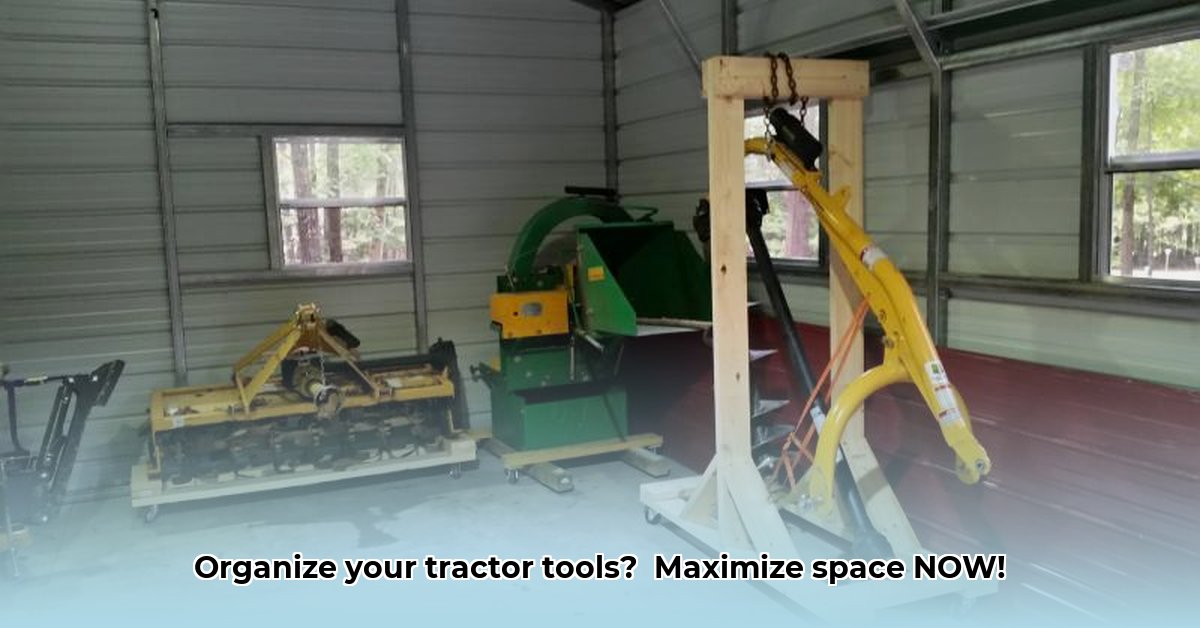
Tired of tripping over farm equipment and wasting precious time searching for the right tool? Efficient tractor implement storage is key to a productive and safe farm operation. This guide provides practical, step-by-step instructions for creating a smart storage system tailored to your farm's size and budget. We'll explore various solutions, from simple DIY projects to more advanced setups, using real-world examples and expert advice. For more shelter options, check out this tractor shelter resource.
Assessing Your Needs: Laying the Foundation for Success
Before investing in any storage solution, thoroughly assess your needs. Consider these crucial factors:
- Number and Size of Implements: Inventory all your implements, noting their dimensions and weight. This will determine the storage capacity you need. Do you primarily use small implements like tillers and seeders, or larger equipment like hay balers and plows?
- Available Space: Measure your existing storage area and identify potential locations for a new storage structure. Consider both floor space and vertical space.
- Budget: Establish a realistic budget for materials, labor, and potential professional services. Remember, a well-planned, cost-effective system is far more valuable than an extravagant, poorly organized one.
- Environmental Considerations: How will you protect your implements from the elements (sun, rain, snow)? Will you need to address drainage concerns?
Answering these questions will guide you towards the most efficient and cost-effective storage solution. A small hobby farm will have different needs than a large-scale operation.
Budget-Friendly Storage Solutions: DIY Genius on a Dime
You don't need a large budget to improve your implement storage. Repurposing materials offers a fantastic way to save money and get creative.
1. Pallets: The Unexpected Storage Hero
Used shipping pallets offer surprisingly versatile storage options. Construct simple shelving units by stacking and securing pallets. Ensure stability by using sturdy pallets and reinforcing connections as needed. Remember to sand down any rough edges to prevent injuries.
2. Lean-to Sheds: Simple Shelter, Big Impact
A lean-to shed provides basic protection from the elements at a relatively low cost. It's essentially a roof attached to an existing structure, such as a barn or workshop.
Building a Lean-to Shed: A Step-by-Step Guide
- Planning: Measure your implements to determine the lean-to's required dimensions. Add extra space for easy access.
- Frame Construction: Use pressure-treated lumber for the frame to ensure durability and weather resistance. Ensure the frame is level and sturdy.
- Roofing: Metal roofing or corrugated sheeting offers durable, affordable protection. Secure and seal the roofing to prevent leaks.
- Groundwork: A gravel or concrete floor provides drainage and keeps implements off the damp ground.
3. Repurposed Storage Containers: Surprisingly Versatile
Used shipping containers offer surprisingly robust and weatherproof storage. Modify them to fit specific needs; however, transport and placement may require professional assistance.
Stepping Up Your Storage Game: Investing in Efficiency
If your budget allows, investing in robust storage solutions significantly improves organization and protection.
1. Modular Shelving: Adaptability is Key
Adjustable shelving systems adapt to various implement sizes. Rearrange shelves as your needs change, making them highly versatile.
2. Custom-Built Sheds: Tailored to Your Needs
A custom-built shed offers maximum protection and complete customization. Consider adding features like electricity for lighting and a workbench. Expect a higher initial investment.
3. Cantilever Racking: Perfect for Long Implements
Cantilever racking is ideal for long, awkward implements like hay rakes. It maximizes space utilization and keeps implements organized and easily accessible. Installation may require professional assistance.
Smart Strategies for Every Farm Size
Regardless of your chosen storage solution, these practices significantly improve organization and efficiency:
- Prioritize Accessibility: Keep frequently used implements readily accessible to save time and effort.
- Implement an Inventory System: Maintain an inventory (spreadsheet or app) to track equipment, prevent duplicate purchases, and easily locate specific implements.
- Regular Maintenance: Clean and lubricate implements regularly to extend their lifespan and maintain optimal performance.
- Safety First: Secure implements properly to prevent accidents and injuries.
Choosing the Right Storage Method: A Quick Comparison
The best storage solution depends on your specific needs and resources.
| Storage Solution | Pros | Cons |
|---|---|---|
| Pallet Racking | Low cost, easy DIY, adaptable | Limited weather protection, structural limitations for heavy items |
| Lean-to Shed | Cost-effective, basic weather protection | Requires DIY skills, limited space |
| Custom-Built Shed | Maximum protection, customizable | High initial investment |
| Modular Shelving Units | Adaptable, organized storage | Can be expensive, limited capacity for very large implements |
| Cantilever Racking | Ideal for long implements, maximizes space utilization | High initial cost, space-consuming, may require professional installation |
Remember, the optimal solution is the one that best suits your specific circumstances. Don't hesitate to combine different methods for a customized system. The key is to keep implements safe, organized, and readily accessible. By implementing these strategies, you’ll save time, extend the life of your equipment, and improve overall farm efficiency.